A hidden pool leak can waste thousands of gallons of water, increase your utility bills, and lead to costly structural damage if left untreated. While some leaks are easy to spot, many occur underground or within the pool’s plumbing system, making them nearly impossible to find without specialized equipment.
Modern pool leak detection technology allows professionals to locate leaks quickly and accurately with minimal disruption to your property. Instead of relying on guesswork or unnecessary excavation, trained technicians use advanced tools to pinpoint the exact source of water loss.
Here’s a closer look at the technology behind professional pool leak detection.
Electronic Leak Detection
Electronic leak detection is one of the most accurate methods for locating leaks in pools. Sensitive listening equipment amplifies the sound of water escaping through cracks or damaged plumbing, allowing technicians to detect leaks that cannot be seen with the naked eye.
This technology is especially useful for finding leaks in:
- Underground plumbing lines
- Pool walls
- Pool floors
- Water features
- Spa systems
Because electronic equipment can identify the location of a leak with remarkable precision, it often eliminates the need for unnecessary digging or demolition.
Pressure Testing
Pressure testing is used to determine whether the plumbing system is holding pressure properly. During this process, individual plumbing lines are sealed and pressurized with air or water.
If the pressure drops over time, it indicates that a leak exists somewhere within that section of plumbing.
Pressure testing helps identify leaks in:
- Return lines
- Suction lines
- Main drain lines
- Cleaner lines
- Water feature plumbing
By testing each line separately, technicians can narrow the search to a specific area before beginning repairs.
Dye Testing
Dye testing is a simple but highly effective technique used to locate visible structural leaks.
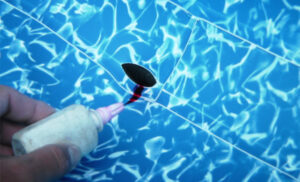
A specialized leak detection dye is carefully released near suspected cracks, fittings, skimmers, lights, or drains. If water is escaping, the dye is naturally pulled toward the leak, revealing its exact location.
Dye testing is commonly used for:
- Hairline cracks
- Skimmer leaks
- Around return fittings
- Pool lights
- Main drains
- Tile line cracks
Because it is non-invasive, dye testing is often one of the first diagnostic methods performed during an inspection.
Underwater Inspection Equipment
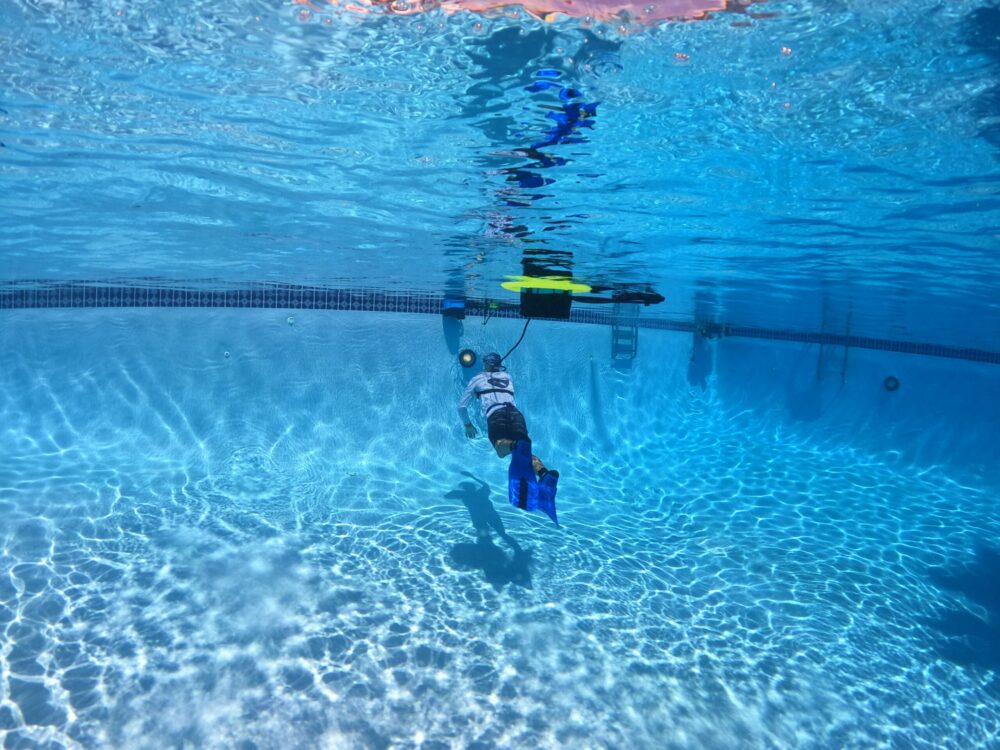
Many leaks occur below the waterline where visibility is limited. Professional leak detection specialists use underwater cameras, dive equipment, and specialized inspection tools to examine the pool without draining it.
This allows technicians to inspect:
- Pool finishes
- Expansion joints
- Floor cracks
- Wall cracks
- Plumbing fittings
- Structural components
Inspecting the pool underwater provides a detailed assessment while avoiding unnecessary downtime.
Acoustic Listening Devices
Leaks often produce unique sounds as water escapes under pressure.
Highly sensitive acoustic listening equipment can detect these sounds even through concrete, soil, or decking. These devices amplify subtle noises that are impossible for the human ear to hear.
Acoustic technology is particularly useful for locating underground plumbing leaks without excavation.
Thermal Imaging
Some leak detection companies also use thermal imaging cameras to identify temperature differences caused by escaping water.
As water moves through soil or surrounding materials, it creates temperature variations that can be detected with infrared technology.
Thermal imaging can assist with locating hidden moisture beneath:
- Concrete decks
- Landscaping
- Pool equipment areas
- Plumbing routes
Although thermal imaging is not used in every inspection, it can provide valuable supporting information in certain situations.
Moisture Detection Equipment
When a leak is suspected outside the pool, moisture meters help determine whether water has spread into surrounding structures or soil.
These tools can identify hidden moisture beneath:
- Concrete
- Pavers
- Landscaping
- Pool decking
- Equipment pads
Moisture detection helps technicians understand the extent of water damage and identify areas that require further investigation.
Why Professional Technology Matters
Hidden pool leaks can have multiple causes, including cracked plumbing, damaged fittings, structural movement, or worn seals. Without the proper equipment, locating the source often becomes a process of trial and error.
Professional leak detection technology offers several advantages:
- Accurate leak location
- Minimal digging or demolition
- Faster diagnosis
- Reduced repair costs
- Protection against unnecessary property damage
- More efficient repairs
Using advanced equipment allows technicians to solve problems quickly while preserving your pool and surrounding landscape.
Signs You May Need Professional Leak Detection
If you notice any of the following, it may be time to schedule a professional inspection:
- Water levels dropping faster than normal
- Frequent need to refill the pool
- Higher-than-normal water bills
- Wet or soggy areas around the pool
- Cracks in the pool deck or shell
- Persistent algae despite proper chemical balance
- Air bubbles coming from return jets
- Pool equipment running longer than usual
Early detection can prevent a minor issue from becoming a major repair.
Protect Your Pool with Advanced Leak Detection
Modern leak detection technology has made finding hidden pool leaks faster, more accurate, and far less invasive than traditional methods. Whether the leak is in the plumbing system, pool shell, skimmer, or equipment, today’s specialized tools help professionals identify the problem with precision.
If you suspect your pool has a leak, don’t wait until water loss causes structural damage or expensive repairs. A professional leak detection inspection can provide peace of mind and help protect your investment for years to come.
Contact our experienced pool leak detection team at Pool Side Leak Detection at (210) 772-8840 to schedule a comprehensive inspection. Using advanced diagnostic technology, we’ll locate the source of your leak quickly and recommend the most effective solution to get your pool back to peak condition.